
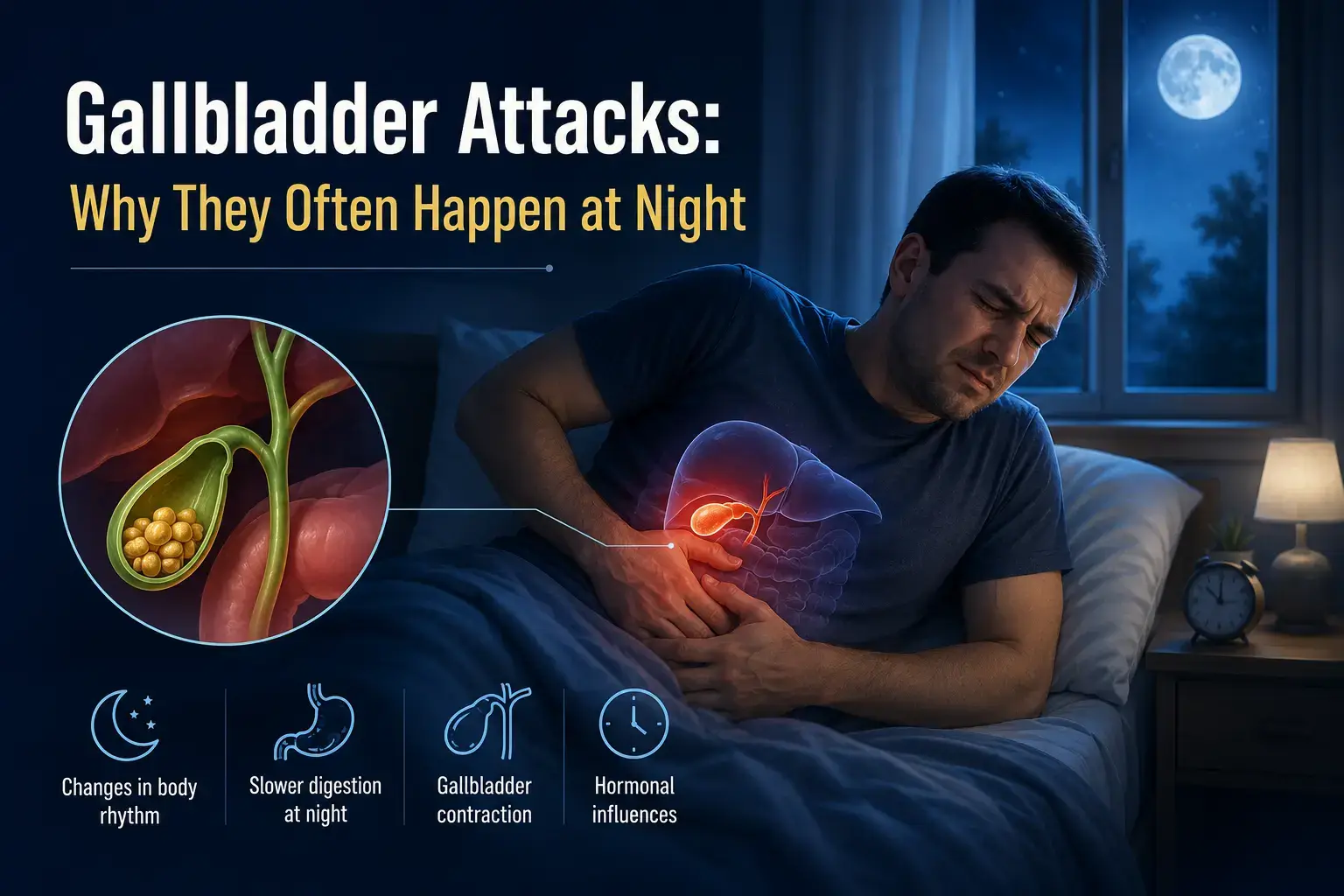
Gallbladder Attacks: Why They Often Happen at Night
Many people are surprised when severe abdominal pain wakes them in the middle of the night. If you’ve ever experienced sudden pain in the upper right side of your abdomen after dinner or while sleeping, you may have had a gallbladder attack at night.
Gallbladder attacks are commonly linked to gallstones, and they often occur during the evening or nighttime hours. Understanding why gallbladder attacks happen at night can help you recognize the warning signs early and seek timely treatment before complications develop.
At Samata Hospital, Dr. Ashish Dhadas provides expert evaluation and treatment for gallbladder conditions, helping patients receive accurate diagnosis and appropriate surgical care when required.
What Is a Gallbladder Attack?
A gallbladder attack, also known as biliary colic, occurs when a gallstone temporarily blocks the flow of bile from the gallbladder. As the gallbladder contracts to release bile for digestion, pressure builds up behind the blockage, causing sudden and intense pain.
The pain usually begins in the upper right abdomen but may spread to the back, right shoulder, or between the shoulder blades. Episodes can last from 30 minutes to several hours before gradually subsiding.
Why Do Gallbladder Attacks Often Happen at Night?
One of the most common questions patients ask is why the pain tends to occur after bedtime. Several factors contribute to gallbladder attacks at night.
Heavy Evening Meals
Many people eat their largest meal in the evening. Foods high in fat stimulate the gallbladder to release bile to aid digestion. If gallstones are present, this contraction can cause a stone to block the bile duct, triggering a painful attack a few hours after eating.
Slower Digestion During Sleep
As the body prepares for sleep, digestion naturally slows. Bile may remain in the gallbladder for longer periods, increasing the likelihood of irritation or blockage in individuals with gallstones.
Lying Down Can Make Pain More Noticeable
While lying flat does not directly cause a gallbladder attack, it may make abdominal discomfort feel more intense because there are fewer distractions and changes in body position.
Overnight Fasting
During the night, the gallbladder stores bile for several hours without emptying. In people with gallstones, this prolonged storage may contribute to increased pressure and discomfort when the gallbladder contracts again.
Symptoms of a Gallbladder Attack
The symptoms of a gallbladder attack can vary in intensity but often include:
- Severe pain in the upper right abdomen
- Pain that spreads to the back or right shoulder
- Nausea or vomiting
- Bloating or indigestion after fatty meals
- Pain lasting from 30 minutes to several hours
If the blockage leads to infection or inflammation, symptoms such as fever, chills, yellowing of the skin (jaundice), or persistent vomiting require immediate medical attention.
What Causes Gallbladder Attacks?
The most common cause of gallbladder attacks is the presence of gallstones, which form when substances in bile become imbalanced. However, several factors increase the risk of developing gallstones, including obesity, rapid weight loss, pregnancy, diabetes, a diet high in fat, increasing age, and a family history of gallbladder disease.
Although anyone can develop gallstones, women are generally at a higher risk than men.
How Are Gallbladder Attacks Diagnosed?
Doctors diagnose gallbladder disease by reviewing your symptoms, performing a physical examination, and recommending imaging tests such as an abdominal ultrasound. Blood tests may also be performed to check for infection, inflammation, or liver problems if complications are suspected.
An early diagnosis helps prevent more serious conditions such as acute cholecystitis or blockage of the bile ducts.
Treatment for Gallbladder Attacks
Treatment depends on the severity and frequency of symptoms. Mild attacks may initially be managed with pain relief and dietary changes, particularly by reducing fatty foods.
However, if gallstones cause repeated attacks or complications, laparoscopic gallbladder surgery (cholecystectomy) is often the most effective treatment. This minimally invasive procedure removes the gallbladder and helps prevent future attacks.
Most patients recover quickly and can return to their normal activities within a short period after surgery.
Can Gallbladder Attacks Be Prevented?
Although not every gallbladder attack can be prevented, adopting healthy lifestyle habits can lower the risk. Maintaining a healthy weight, eating a balanced diet rich in fibre, avoiding rapid weight loss, staying physically active, and limiting high-fat meals especially late in the evening can help support gallbladder health.
People with known gallstones should consult a specialist if they begin experiencing recurrent pain.
When Should You See a Doctor?
You should seek immediate medical attention if you experience:
- Severe abdominal pain lasting more than a few hours
- Repeated nighttime attacks
- Fever or chills
- Yellowing of the eyes or skin
- Persistent nausea and vomiting
Prompt treatment can help prevent complications such as gallbladder infection, pancreatitis, or bile duct obstruction.
Conclusion
Gallbladder attacks at night are often triggered by the gallbladder’s response to fatty meals, slower digestion during sleep, and the presence of gallstones. While occasional discomfort may seem manageable, recurring episodes should never be ignored.
Early diagnosis and appropriate treatment can prevent serious complications and improve your quality of life. If you are experiencing symptoms of gallbladder disease, consult Dr. Ashish Dhadas at Samata Hospital for a comprehensive evaluation and personalized treatment plan.
“Also Read: Gallbladder Pain? Here’s When You Should Visit a Specialist in Dombivli“
➝https://www.samatahospital.com/gallbladder-pain-heres-when-you-should-visit-a-specialist-in-dombivli/



No Comments
Sorry, the comment form is closed at this time.